
Dive deep into the abysses of innovation by taking a closer look at the drawbacks of technology in the future. In the face of AI-induced work displacement and the destruction of digital privacy, through the phenomenon of tech burnout and ecological expenditure, we can identify the urgent issues of 2026 and beyond. Learn about the impact of hyper-connectivity on mental health and why the next decade requires digital resilience, which is the sponsorable skill. Be aware, remain human and understand how to work around the traps of the automated world.
The Dark Side of Tomorrow:
The future with its shiny advertisements: smoothing self-driving cars, artificial assistants, and more technologically advanced VR worlds are more beautiful than the real one. One can get caught up in the tech-Tupian dream easily. However, in the further part of 2026, the honeymoon with innovation at all costs is beginning to be phased out.
https://www.weforum.org/reports/global-cybersecurity-outlook-2024/
The truth? Each new jump in silicon and code is accompanied by a dark side. As much as we have been comfortable, we are also carrying a baggage that is not exactly light. As our mental health suffers a blow to the system and the planet ends up paying the bill to our giant data centers, the downsides of technology in the future are not a mere sci-fi cliche anymore, but are the new reality of our lives. We should lift the curtain and see the reality of the real challenges we are going through as we run into the future in 2030.
The Human Replacement Crisis (Job Displacement)
It’s the elephant in the room. Automation was something we believed was only in the factory floor, however, in 2026 AI is coding, portfolio management, and even diagnosing diseases.
Some recent reports by McKinsey Global Institute show that 14 percent of the workforce worldwide could be forced to change jobs by 2030, as a result of automation. It is not a matter of missing a paycheck this is the loss of a purpose. Once an algorithm can perform your job more competently, on a short basis, and at a lower cost, it is causing a competence hangover in which humans feel unneeded in their own sectors.

Rapid Devaluation: It is possible to lose the skills that it has taken years to master within months.
The Entry-Barrier: AI is cannibalizing the Junior roles, and the next generation will find it difficult to take a step up the ladder.
The Death of Privacy in a Hyper-Connected World
Let me remember the feeling of incognito mode being like a shield. Those days are gone. Technology will not only monitor your position in the future, but it will also monitor your moods. With the advent of the so-called Affective Computing, now sensors on our devices can examine your dilation of the pupil and heart rate to determine how we feel. As much as this contributes to the cause of personalized healthcare, it is also a Pandora box to advertisers and governments.
https://www.technologyreview.com
We are heading to the era of constant surveillance, when biometric data becomes the currency.
Key Concern: You can never change your face or DNA, as you can change your password in case it is exposed in a privacy attack.
Digital Burnout and the Culture of the 24/7
Technology was promised to save time. Rather, it has simply enabled us to cram more work into all our waking hours. The distinction between the home and the Office is no longer a blur, but it has vanished.
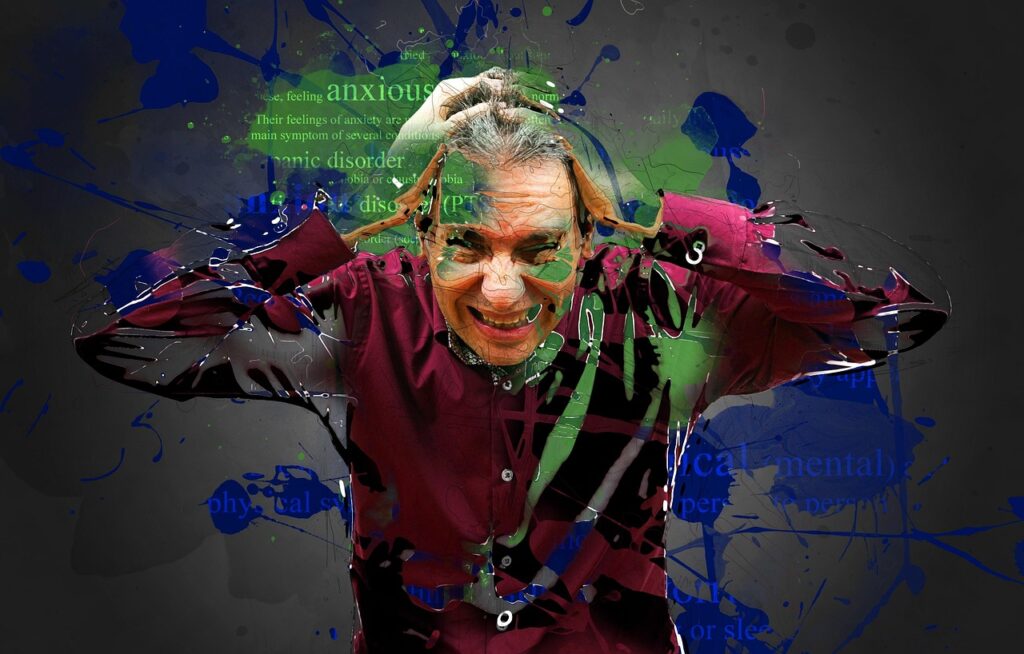
Digital anxiety will be a known epidemic of health in 2026. Endless interruptions and the demand to answer at once has caused our brains to be rewired to work under constant partial attention. We are never out of touch, but never so remote.
The Mental Health Toll:
Dopamine Fatigue: The brains are burned out by constant blows of social validation.
Social Comparison: Real life is boring and not enough in comparison to the high-tech filters and AI-edited lives
.
Environmental Cost of the Cloud.
We refer to a cloud as though it is a weightless airy object. As a matter of fact, the cloud consists of huge humming data centers that consume electricity as though there was no tomorrow.
However, the energy consumption of larger AI models goes on a spiral. According to the projections of the International Energy Agency (IEA), the volume of electricity consumed by data centers will grow by 15 percent every year to 2030.
https://www.theguardian.com/technology
Water Usage: Water which is used to cool many of these centers takes in millions of gallons.
E-Waste: It is due to our upgrade culture that results in millions of tons of wasted tech, which in many cases contributes to the soil of developing countries (leak toxins).
Cybersecurity: Arms Race We’re Losing
With our technology becoming smarter, so are the evil doers. We are currently experiencing the digital battle of AI vs. AI.
According to reports by World Economic Forum, phishing attacks are being virtually indistinguishable to actual emails produced by generative AI. We are entering the age of Deep fake Fraud, in which a scammer can use a video created by AI of your boss or a relative to approve a wire transfer. Technology is no more fair than what we feed it. What is bad, is that the data we have is complete with human biases.
When making critical choices, such as whether someone gets a loan or a job, or even an impulse to bail, using future technology that is prone to misinterpretation, these biases are built in. That forms a cycle of inequality, as the marginalized communities are increasingly forced to the periphery by the so-called neutral algorithms.
The Dying of the Critical Thinking.
No need to learn how to orientate with GPS. You don’t need to learn how to write JN, you have LLMs. The biggest drawback of the future technology is the weakening of the human cognitive skills. When we delegate our thinking to the machines we lose the mental muscles that are needed to solve problems and think profoundly. We are turning into professional users of tools, however.
The Way to Survive in the Future.
It’s not all doom and gloom. It is not about quitting your smartphone and moving to a cave, it is about becoming digitally resilient. This means: Creating Hard Boundaries: Creating tech-free zones in your house.
Checking Information: Not believing AI-generated information.
Human-Centric Learning: Given that AI still cannot mimic such soft skills as empathy, ethics, or multifaceted leadership, it will gain greater importance.
To learn more about how to strike the right balance in your life in the digital age, read our article on how to perform a digital detox without losing your job.
. Reality gap: Deepfakes and Death of Truth.
The biggest drawback in years to come will not be a sluggish connection to the internet but the thing that will not be able to make you believe your own eyes. The digital realm of the Post-Truth is coming in.As generative AI is becoming hyper-realistic, “Deepfakes” have long since outgrown humorous celebrity face-swaps. They are being engaged to generate artificial news, judicial cases counterfeit evidences, and even artificial identities to commit identity theft.
Why This Matters:
Social Polarization: In the event that individuals fail to agree on what is real, then they cannot engage in constructive debates.
The Dividend of the Liar: Public personalities are able to dismiss the actual, incriminating video of them by suggesting that it is simply an artificial intelligence hoax, which undermines responsibility. In the run-up to 2030, tech giants cease being mere sellers of products and are constructing walled gardens. This is the drawback of Proprietary Dependence.
Think about your smart home. When you have twenty devices linked to a single particular AI ecosystem, it would be close to impossible to switch to a competing potential that is more ethical or secure. You are “locked in.” This reliance may be expanded in our health (through wearable data) and our financial sector in the future.
The Physical Health Downward Spiral: The “Sedentary Tech” Trap.

We are concerned about our minds but our bodies are silently paying their own price. The upcoming technology especially Virtual Reality (VR) and Augmented Reality (AR) will be a threat to our physical world being secondary.
There is increased incidence of Tech-Neck, repetitive strain injuries and physical activity across the globe is on the decline. When the physical well-being of the population is taken into consideration, the outcomes of immersive spaces such as the Metaverse becoming our main source of socialization and labor may be overwhelming, with the vision impairment and cardiovascular diseases being just the tip of the iceberg.
https://www.iea.org/reports/electricity-2024
Single point of failure- the fragility of a single point of failure.
The easier we automate the more vulnerable our civilization is. Previously when the ledger of some local shop got lost only that shop was affected. In 2026, an error in the code of a cloud provider or a solar flare in the satellite GPS can put the entire global logistics, banking, and emergency services offline at the same time.

The fact that we have become over-reliant on the grid implies that we have lost our ability to operate without it. In case the so-called smart systems break down, most of us would have no analogue capabilities to guide ourselves, prepare food, or communicate.
In this context, it is important to note that balance between mediated relationships varies according to individual and contextual factors. <|human|>Summary: Striking the Balance.
The negative aspects of technology in the future are not a case to halt the advancement. Rather, they are an appeal to move on with purpose. It is time to drop the Move Fast and Break Things and a philosophy of Move Thoughtfully and Protect People.
We must advocate for:
Right to Repair: It should guarantee that we possess our technologies, not out of rent.
Legal AI Ethics: Maintaining a human-in-the-middle decision-making process.
Digital Literacy: Training the future generation to identify a bot one mile away.
It is still up to us to write our future provided we do not give the pen to the algorithms




Leave a Reply