
Find out how AI in everyday life went from being a futuristic fad to an important, invisible partner in 2026. This long guide talks about how AI is used in the real world, like in smartphones, to make work more productive, keep money safe, and improve personal health. Find out how “AI Agents” and “On-Device Intelligence” are making everyday tasks easier, making photography better, and even finding health problems before they happen. Whether you’re a techie or just a casual user, you should know how to use these tools to save time and improve your human potential while staying up to date on privacy and ethics in our world that is becoming more automated.
How AI is Quietly Running Your Daily Life in 2026, Beyond the Hype:
Do you remember when we used to argue about whether AI would ever “arrive”? Well, take a look around. It’s 2026, and there isn’t a giant robot in your kitchen like you thought there would be. It was more like how your phone suggests a reply to an email before you even finish writing it, or how your smart thermostat knows you’re coming home early because your calendar changed suddenly. AI has gone from being a flashy tech demo to the engine that runs our daily lives without us even knowing it. It’s not just “talking to a computer” anymore; it’s about a world that changes to fit us in real time. AI is probably doing more for you than you think, whether you’re a student, a worker, or just someone trying to get through a busy Tuesday.
Let’s take a look behind the scenes at how AI is really being used in your life right now and how you can make it work even better for you.
1. The Smartphone in Your Pocket: The Best AI Center:
It is not a specialized lab computer but your social media scrolling device is the most powerful AI device you possess. The Smartphone will not just be smart but anticipatory by 2026 Photos and Memories. Have you ever wondered why you have taken pictures in lowlight and they appear like those of a pro? That’s what “Computational Photography” is. Your phone doesn’t just take one picture; it takes dozens of frames in a split second and uses AI to put the best pixels together. Recent smartphone camera trends say that AI now takes care of everything from getting the skin tone right to getting rid of that photobomber in the background.
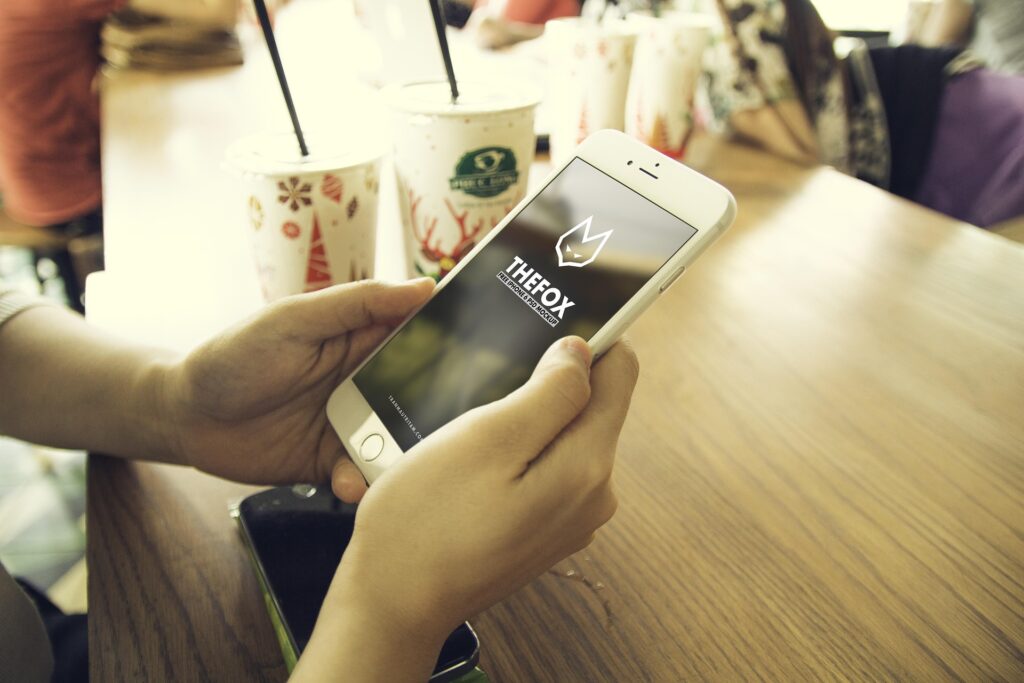
We’re getting closer to a world without searches. Instead of typing in a question, your phone uses *On-Device AI* to suggest apps you might use based on where you are and what time it is.
- Face ID: It’s not just a picture match; it’s a 3D neural map that gets smarter as you get older or grow a beard.
- Voice Assistants: Siri and Google Assistant can do more than just “set a timer.” They now know how to understand context, which makes conversations feel more human.
2. AI at Work: Your New Digital Coworker:
The biggest change has happened at work. We are no longer asking, “Will AI take my job?” fear and into the “How can AI help me finish by 5 PM?” era. We don’t just use “chatbots” in 2026; we use “AI Agents.” These digital helpers can really do things. An agent can check everyone’s availability, make an agenda based on previous emails, and even send out the calendar invites if you’re planning a meeting.
AI is being used as a “co-pilot” by writers and designers. Microsoft’s 2026 Work Trend Index says that more than 70% of professionals use AI to do “drudge work” like summarizing long meetings or formatting spreadsheets so they can focus on the creative strategy that really matters.
3. The “Invisible” AI: Money, Shopping, and Safety:
You don’t always see the most important uses of AI. These systems work behind the scenes to make sure your life goes smoothly and safely. Every time you swipe your card, an AI model checks to see if it’s a scam. It looks at how fast you spend money, where you live, and what you do. If you’re in New York and your card is used in London three minutes later, AI will block it before you even get the alert.
Their recommendation engines use Deep Learning to guess what you’ll want next. In 2026, this has changed to “Predictive Shipping,” where businesses sometimes send things to local warehouses before you even click “Buy.”
4. Health and Wellness: A Physician on your Wrist:
The wearable devices we own have become health monitors because of AI.. It’s not just about counting steps anymore; it’s about saving lives.
- Heart Health: Modern smartwatches use AI to find Atrial Fibrillation (Abib) with amazing accuracy, often weeks before a doctor can see it.
- Sleep optimization: AI looks at your circadian rhythm and tells you the best time to go to bed for the best recovery.
- Health of the Mind: New apps use AI to look at how you type or talk to find early signs of burnout or anxiety and give you a gentle nudge to take a break.

5. The Moral Side: Privacy and Human Connection:
You have a lot of power, but you also have a lot of responsibility. The conversation about *Data Privacy has never been more important as AI becomes more a part of our lives. Keep in mind that AI is a tool, not a replacement for how people think. The point isn’t to let AI run your life; it’s to let AI take care of the “robotic” parts of your life so you can be more human. — Tech Industry Motto, 2026.
AI is not a technological issue anymore; it is a life issue. The future of AI is everywhere, the traffic lights are being optimized by AI, the crops are being managed by AI, we will even have AI in the food we consume.
6. Workshop Crisis and Quality Necessity:
With AI producing millions of lines of code or other content of low quality (Workshop), or hallucinating content a new high-value position has been created: The Human Auditor. The companies are in need of Human in the Loop specialists that can confirm the validity of AI output. Reliability in the year 2026 is more beneficial than Velocity. When you are the kind of person who will ensure that a system will not crash at 2 AM, then you are virtually unfreeable.
7. Pivot Tactics: Your 2026 Playbook:
When you want to join the tech world nowadays, it is time to leave the classic resume behind. The Degree First mindset of hiring has been overtaken by Skills-Based Hiring in 2026. More than 70 percent of employers have made portfolios and exhibited skills more important than the school you attended. Stop collecting Certificates: Build a single, multi-agent AI system and write about it on GitHub. Master Domain Expertise: Choose an industry (such as Finance or Climate) and be the technical expert of that particular industry.
Artificial Intelligence (AI) is no longer a point of novelty but an indispensable invisible utility, similar to electricity or the internet, in 2026. It is no longer computer-based, but it saturates the physical and social arrangements of our everyday life, presenting us with a mixture of hyper-efficiency and sophisticated ethical dilemmas.
8. Customization and Productivity:
The shortest impact of AI is the removal of the cognitive friction of everyday life.
- Hyper-Personalization: Since Spotify playlists that try to foresee your mood, all the way to e-commerce sites like Amazon that recommend products to their users before they notice they need any of them, AI uses digital twins of our consumer profiles to personalize the world to our liking.
- Intelligent infrastructure: AI is in charge of urban movement. The modern GPS systems do not simply find the shortest route, neural networks are used to forecast the traffic 90% more accurate by studying real-time weather, historical data as well as live incidences.
- The Personal Assistant: AI, such as Gemini, ChatGPT, and similar programs have become platforms that schedule meetings, write your emails according to your specific voice, and summarize text in 50 pages in just a few seconds, which actually provides the average person with the efficiency of a small team.

9. Health and Safety
Artificial intelligence has taken the form of a mute spectator in the background of our physical existence.
- Available Preventative Healthcare: Wearables are no longer counting the number of steps; they are analyzing the rhythm of the heart and anticipating a possible health disaster even before it is realized. Cancer detection in a clinical setting has been enhanced by almost 40 percent with AI diagnostic tools.
- Security Artificial intelligence: allows banks to detect fraud transactions more accurately than human-beating and email filters are sophisticated enough to detect phishing attacks that are deep faked and previously deceiving 30 percent of users.
10. The Labor Market “Tsunami”
It has probably had the greatest impact on our working. The IMF has reported the effects of AI on workforce as a tsunami, with close to 60 percent of the jobs in advanced economies being impacted.

- Job Transformation: Although AI is being used to replace low-skilled clerical and data-entry jobs, it is complementing skilled occupations. One developer nowadays can spend less time on the code called boilerplate and more on high-level architecture as a co-pilot with AI.
- The Skills Gap: This change has produced a price on AI literacy. Learning to work with AI is turning out to be a minimum qualification to work, just as basic computer literacy in the late 90s.
11. Ethical and Social Trade-offs.
The omnipresence of AI has come with major shadows despite the advantages.
- Privacy Erosion: The AI data insatiability needs to watch our behavior at all times. The issue of AI-enhanced CCTV and predictive policing becomes a matter of concern in most cities since it is seen as a shift toward a situation where the society is not insecure, but rather becomes monitored by the police.
- Algorithmic Bias: Since AI is trained on previous data, it is capable of reproducing historical biases. It is especially hazardous in high stakes processes such as hiring, loan applications and even healthcare diagnosis of the underserved groups.
- Digital Fatigue: The more AI recommendation loops perform well, the more they are able to cause filter bubbles, which make social polarization even more prominent, leading to such mental health issues as digital burnout.
- https://www.theverge.com/
Conclusion:
The future of AI in 2026 is a paradox: it will buy us more time by automating the mundane, but it will require more attention on our part, that is, addictive individualization. The issue in the future is not only to create smarter machines, but to train the human AI literacy that is needed to live in a world where machines are becoming increasingly indistinct in terms of the intent and execution of actions. Tags: AI tools, Artificial Intelligence, Smartphones, Future of Tech 2026, Productivity, Digital Transformation, Machine



Leave a Reply