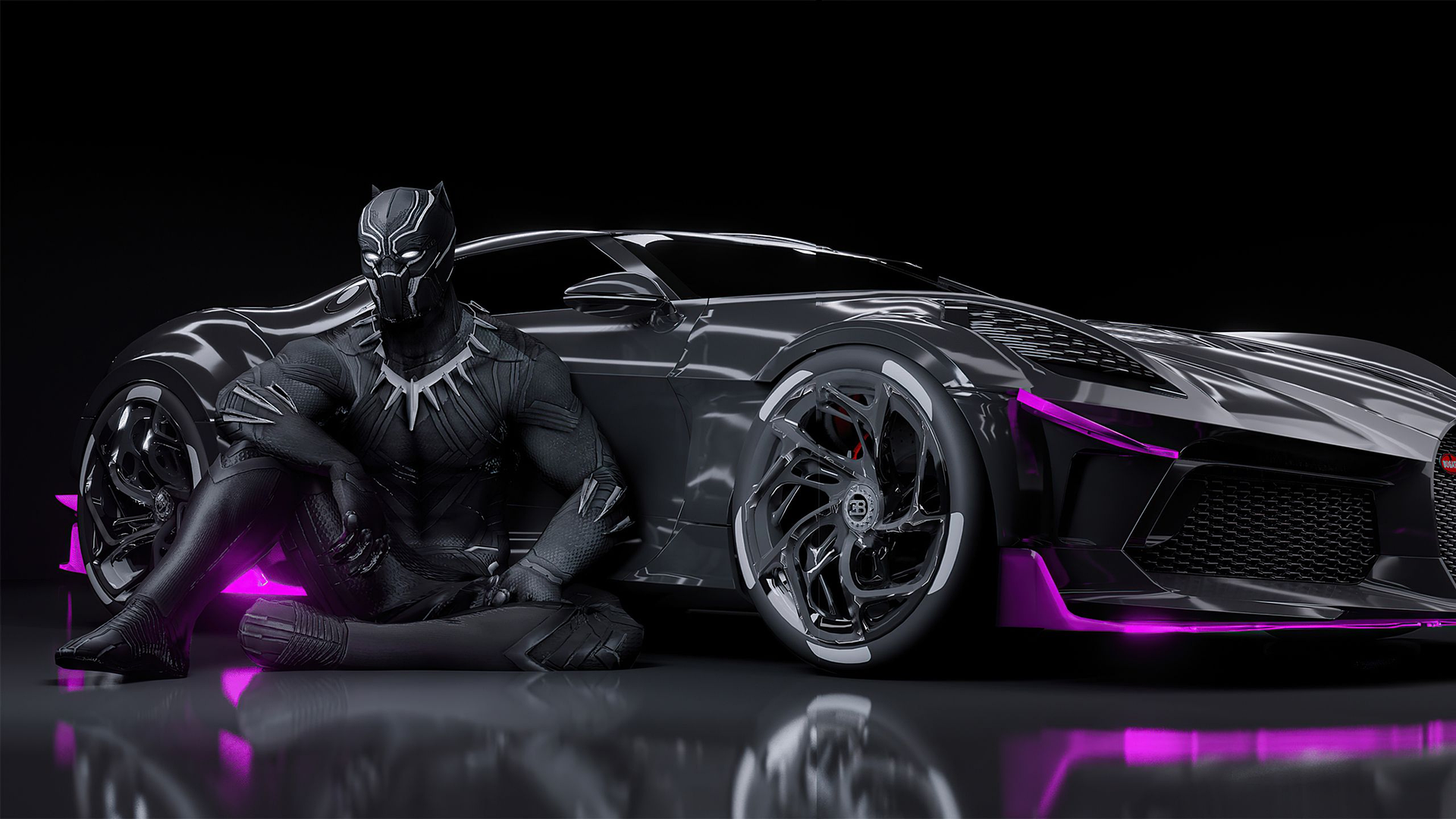
The Future in the Driver Seat: How AI and Robotics Are Reinventing your car.
Meta Description:
Learn the role that AI and robotics are playing in making cars more than just mere machines and more of intelligent companions. This in-depth analysis covers self-driving technology, AI-driven safety, and robotic manufacturing revolution. Get to know how the Software-Defined Vehicles are transforming our travelling experience, making the roads safer, and personalizing our driving experience. We simplify the complex technology in small terms, examining both neural networks down to robotic assembly lines. Keep up with the trend in the automotive revolution where AI is on the open road.
________________________________________
This is because, when you get out to your driveway, rather than simply sitting in a metal box with four wheels, you are now in a high-performance robot who knows how hot you like it, what songs to play in the morning, and which road is the safest to take to work. It reads like a movie in a science-fiction, but it is the reality that is being played out in the motor industry today.
The car that we used to know over the past 100 years is being killed. Instead, a new generation of machine is being created one that runs on Artificial Intelligence (AI) and advanced robotics. We are not only talking about self-driving cars, we are talking of cars that are intelligent, learn and defend themselves.
Now, let us lift the veil about the radical transformation of the transportation of point A to point B that is being brought by AI and robotics.
This article explores the concept of AI in cars and the challenges involved in their design and operation.
Whenever individuals mention AI in cars, the first thought that comes to their minds is a car being driven by itself as the driver takes a nap in the back seat. Although that is the end-game, AI is already working hard in the background.
What is really happening with AI?
AI is at its basic level the brain. The contemporary vehicles have dozens of sensors, cameras, and Radar/Lidar systems. These sensors present a continuous flow of an information to a computer in the car. This data is analyzed by the AI in real-time with the help of machine learning.
As an example, when a ball is thrown into the street, the AI does not simply see an object that is round. It knows the trend, anticipates that a child may be running after it and brakes it before you even open your eyes. This is the influence of predictive intelligence.
The transformation to Software-Defined Vehicles.
We are heading to the age when the software, rather than the engine is of primary importance. Cars are now updated using Over-the-Air (OTA) updates just as your smart phone is updated with additional features. The way your car will get smarter is literally that in the night your car will be smarter, when it is parked in your garage.
2. Robotics: Moving out of the Factory Floor to the Chassis.
Whereas AI is the brain, robotics is the body and the creator. The interaction between the car and robots is in two ways.
Robotic Manufacturing
The robots were first applied in car factories, however, modern coots (collaborative robots) are in a new dimension. They engage in AI which they use in collaboration with human beings to conduct high accuracy operations such as laser welding and installation of micro-chips with no error margin. This results in safer cars which are more durable.
The Car as a Robot
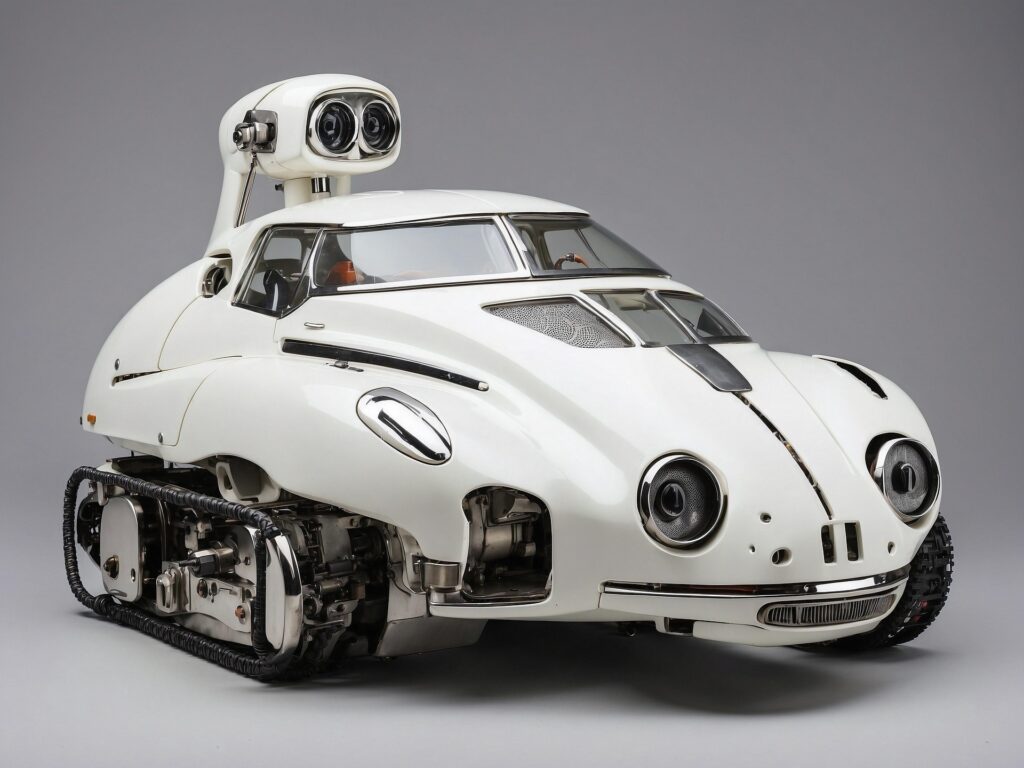
In numerous aspects, an autonomous car of the present day is a roving robot. It has actuators, which are the robotic equivalent of muscles, to steer the steering wheel, press the brakes and throttle. This is what enables level 4 and level 5 autonomous driving as the seamless incorporation of these robotic components with AI software.
________________________________________
3. The Way AI Makes Roads Safer (And Saves Lives).
The biggest AI revolution win is likely to be in the field of safety. More than 90 percent of road accidents are caused by human error, whether it is due to a lack of concentration, exhaustion or improper judgment. AI does not get fatigued, neither does it check his or her phone.
ADAS Advanced Driving Assistance Systems.
It is possible that you are already using AI and you are not aware of it. Features like:
• Lane Keep Assist: Keeps you straight when you get lost.
• Adaptive Cruise Control: Speed adjustment depending on the car before.
• Automatic Emergency Braking: This is the detection of a car in the process of colliding and halting the vehicle.
These are not mere features any more, but the building blocks of the world where traffic accidents have zero victims.
________________________________________
4. The Problems: Why Can I not Nap in My Car Yet?
Why is not everybody riding in an “Robot-Taxi” provided the technology is so good? It is a hard nut to crack, the “Last 1% Problem” is.
The world is not organized in such a manner that AI can be helpful in obeying rules. Snow on road signs, a policeman with a hand signal, or a dog lost on the road are all edge cases, which AI can still not decipher with a hundred percent accuracy. The current stage is a transition stage in which the AI is an assistant and not a replacement.
________________________________________
5. The Future: An Individual Sanctuary.
The car interior of the future is going to be different in the coming decade. And in case the driving is being done by the AI, why should the seats be facing forward?
We are talking of a time when cars will be portable offices, lounge or even bedrooms. The In-Cabin Experience will be handled by AI, which will scan your face and see whether you are stressed and turn on a certain light or smell, to make you feel cal
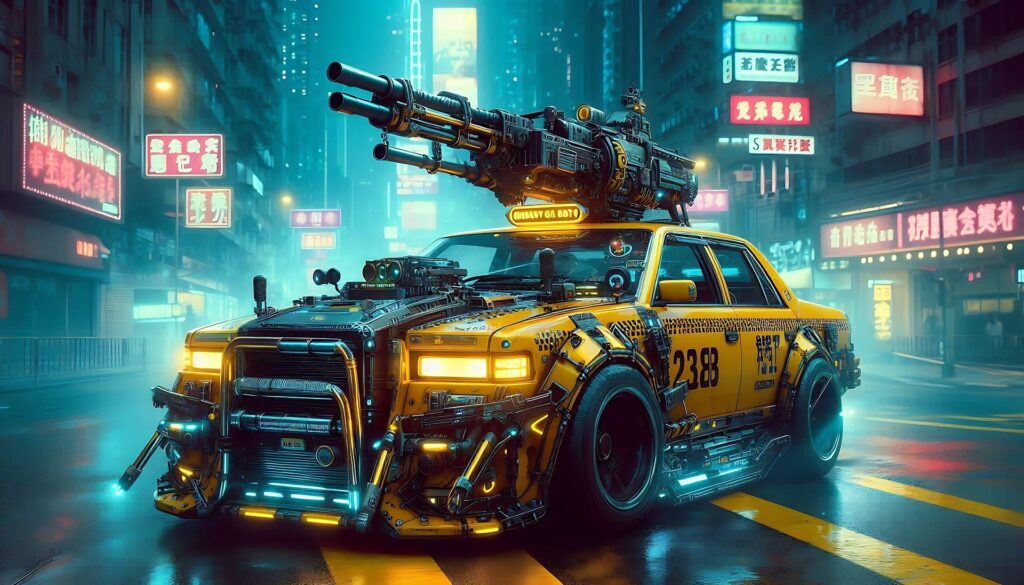
Moving on with our discussion to the future of mobility we must discuss the system behind the scenes. Once all the interest falls on the cool aspect of the dashboard, it is the magic of the code ethics and accuracy of the factory floor that are performing the magic.
The article has also discussed the concept of the Digital Twin: Testing Cars in a Virtual World.
The Digital Twins is among the mind-blowing developments that can be made in the year 2026. Prior to the cutting of a single metal in a factory, engineers make a perfect replica of the car, which is virtual.
Through AI, they will be able to steer this virtual vehicle after millions of miles of virtual weather types, car crashes, and sensor malfunctions. It is not merely a game on the computer but a test of high emotions. Once the corporeal car gets to your driveway, the AI has already been through more road accidents than a mere driver would during a decade of his life. It is fast-becoming popularly known as the virtual-first approach that explains why the modern automobiles are increasingly reliable and safer on an exponentially increasing rate.
6. The Emergence of the Rise of the Predictive Co-Pilot.
Saying Goodbye to the voice (command) days. Do you remember how you used to call mom three times and the car did not get you? It is coming to pass that the AI assistants will be known in 2026 as Predictive Co-Pilots.
The same technology as Chabot’s with advanced AI is now being incorporated in vehicles, like Mercedes-Benz and Volkswagen, literally consisting of a Large Language Model (LLM). You do not have to tell the car to turn on the AC, but you can merely tell it, “I am feeling a bit warm, and then the car will correct the temperature and makes the sunroof less bright, and even recommends you a cooler route. It knows the context, purpose and even the mood. It is not quite an interface, but it is more of an assistant who is fully aware of how you like driving.
Ethics and the Fairness of AI Decisions.
The closer we give AI more authority over us, the more some serious philosophical problems we hit. In case the accident is unavoidable, then what will the AI do?
The scientists of universities, such as MIT are developing the frameworks to make sure AI does not simply base decisions on technical aspects and make ethical choices. As an illustration, in a situation where a car is required to swerve, it is necessary to do it on objective safety information such as that which is the least likely to cause an injury, as opposed to subjective measures. A drawback of the 2026 car brands, however, is that “Responsible AI” is even more popular, so car brands strive to provide their software to secure your family with transparency, fairness, and a lack of the black box aspects of the aging algorithms.
9. EV manufacturing: The Robotic Revolution.
It is impossible to discuss AI and cars not mentioning Electric Vehicles (EVs). Production of EVs is completely opposite to the working process of the traditional cars and needs the degree of robotic accuracy a human being is unable to provide.
The concept of EV Gig factories in the present day is an intelligent environment. It is not merely the assembling of this or that part by bolting, but instead, with the help of AI-mediated vision systems, robots are examining to the micrometer whether the battery cells are aligned.
Modular Assembly: Due to Robotics, a factory can construct a sedan and an SUV on a single production line within minutes.
Sustainability: AI is used to make the factory energy efficient decreasing the carbon footprint of the manufacturing process itself.
This is because even your company is not only doing your green car environmentally green, it was also environmentally green created at the factory.
Lecture 10. V2X: Cars Talk to Each Other.
V2X (Vehicle-to-Everything ) communication is the last solution to the puzzle. With online communication 5G and AI, your car will now be integrated into a huge city-wide chat.
* Car to Car: Your car is able to peer through three cars in front of it when the car is braking severely even to the point when you are not able to see it.
An example of a C2I is called a traffic light this can identify that your car is about to turn green and the AI can optimize your speed to make you a green wave of travel.
Making a network of individual cars a synchronized network will not only improve the trips made by individuals, but will completely solve the issue of traffic jams.
The Road Ahead
The transportation revolution that we are experiencing is the biggest one since we substituted horsepower with horses. The combination of robotics and AI is making an automobile much more than a tool, it is a partner. Be it the regimen accuracy of the robot making the battery or the brain of AI maneuvering the rain, the 2026 technology is all about one thing, get your life easier, secure and connected.
It is not a future coming but it is parked in the garage.
Final Thoughts
AI, robotics, and cars all together in a marriage are not only a matter of cool gadgets, but freedom. It is all about time back to the commuter, the elderly and safer streets. We are lining at the beginning of a new epoch in the history of human beings. The only remaining question is whether you are willing to allow the robot to take the wheel?
Keywords: Artificial Intelligence in automobiles, robotics, autonomous vehicles, future technology, self-driving technology, smart cars, machine learning, car technology.




Leave a Reply