
climate change solutions Find out the amazing history of nuclear technology, its great history, and its future of clean energy. We dissect the mechanics of nuclear fission, the emergence of Small Modular Reactors (SMRs) and why nuclear energy is returning to the battle against climate change in great numbers. Get acquainted with safety innovations, medical advancements, and possibilities of fusion energy in this all-encompassing easy read book. You are an ardent tech follower or you are curious to know why the atom is our best bet in a carbon-free sustainable future.
The Glow-Up of the Atom: Nuclear technology is the Comeback Child of Clean energy.
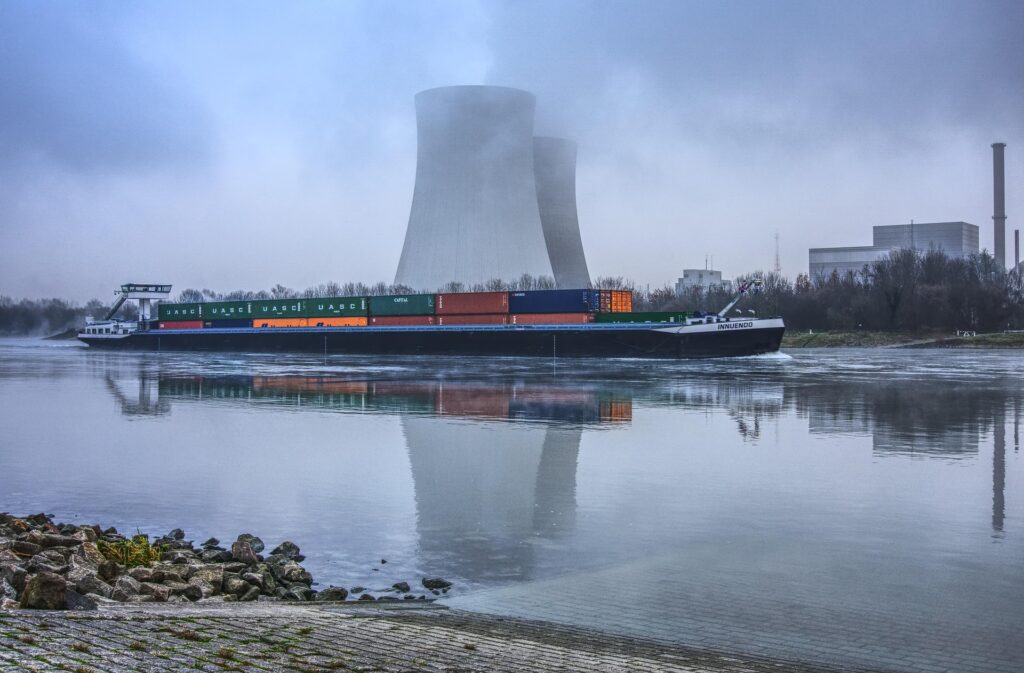
To tell the truth, the nuclear technology has had some branding issue long enough. Talk of the word nuclear, and the first thing that comes to the minds of the majority of individuals is a grainy film of the cold war or an oversized cooling tower used on The Simpsons.
However, here is the point, as we debated about the past, the technology itself underwent a colossal evolution. Nuclear today is not only about big power plants, but about unraveling the largest puzzles of the world, such as finding a cure to cancer or to drive missions to the deep space or even achieve the so-called Net Zero carbon emissions.
Therefore, get a cup of coffee and we will explore why the atom is officially in fashion.
How Does It Actually Work?
Nuclear energy is simply boiled water. Seriously. Most power plants operate by producing heat to rotate a turbine whether it be coal, gas or nuclear. It is the difference which furnishes us with that heat.
A process in which nuclear power is used is called fission. Just picture a little fast billiard ball (a neutron) striking a heavy atom (such as Uranium-235). The splitting of the atom emits an amazing energy and a greater number of neutrons that proceed to strike other atoms.
Shutterstock
This heat is generated by this chain reaction. We utilize that heat in a controlled environment to create steam, rotate a turbine and produce electricity. The power concentration is staggering: a single uranium pellet (a grain of gum bear size) gives as much energy as a ton of coal.
Why It’s “Clean”
Fission does not require combustion, as it is the case with burning fossil fuels. This implies that there are no carbon emissions during use. To have a world where renewable energy sources and a stable climate, nuclear is the base-load power that is not always available to wind and solar when the sun goes down or when the wind ceases to blow.
Small Modular Reactors (SMRs): The Game Changer.
The greatest challenge to nuclear energy has always been the cost and the period of construction of a plant. The conventional reactors are huge, tailor-made projects that require a decade to be built.
Small Modular Reactor (SMR).
SMRs are the building blocks of the energy world. These smaller reactors are produced in factories and transported to their operational sites as opposed to constructing a large plant on the location.
Safety First: SMRs adopt the passive safety systems. It implies they are able to close themselves with the help of gravity or natural convection without having to involve human intervention or external force.
Flexibility: They can either be deployed in remote areas, substitute old coal plants via the current grids or even supply big industrial centers. To learn more about the technical features of these units, refer to the guide of the International Atomic Energy Agency (IAEA) on SMRs.
Outside the grid: Nuclear in Space and in Medicine.
The use of nuclear technology is not merely concerning your light switches. It is quietly rescuing people on a daily basis.
Nuclear Medicine
You have used nuclear medicine in case you had a PET scan or some form of treatment on cancer. Radioisotopes are employed to label the cells in the body so that the doctors can precisely locate the location of a tumor or destroy the malignant cells.
Powering the Stars
Have you ever thought how could the Voyager probes continue to transmit information out of our solar system? Or in what way on Mars the Perseverance Rover goes on? They operate Radioisotope Thermoelectric Generators (RTGs). They are in fact nuclear batteries with lasting life span of decades, where the panels of the sun will not be enough.
The Elephant in the Room: It is Safe?
It is the question no one can answer. And it’s a fair one. When things are bad with nuclear, the headlines scare. But, as you see on the figures of deaths per terawatt-hour, nuclear power is one of the safest sources of energy on the planet, in the same category as wind and solar, and much safer than coal or gas.
Modern Waste Management
We have also become pretty clever in putting up with the leftovers. Deep geological storage facilities such as On kalo in Finland are planned to be used to place thousands of years of waste in stable rock formations at that location. In addition, there are now relatively new “Generation IV reactors in planning and design to literally use old nuclear waste as fuel. Talk about recycling!
The Holy grail: Nuclear fusion.
Although current plants employ fission (tearing atoms apart), the future will be the fusion (combining atoms). This is the same process which drives the sun.
The dream of ultimate clean energy is fusion. It attracts hydrogen (which is in seawater) as fuel, it generates no durable waste, and there is no possibility of an accident of a meltdown. Although it will take us several years before we have a commercial fusion plant, projects such as ITER are making colossal breakthroughs in the process of bottling a star.
Summary: Needs the Atom A Carbon-Free Future.
With more electrified world EVs, AI data centers, and smart cities, we are becoming increasingly power-hungry. This requires a solution that is scalable, reliable and green.
The technology of nuclear has been turned into a precision tool of the 21st century, as opposed to a monster of the 20th century. With battery storage technology and renewables, we will no longer be in the fossil fuel phase by combining it with battery storage technology.
The cost is one of the most frequent reasons against nuclear power. Wind and solar fell in price over the past 10 years, as could be seen in the “Levelized Cost of Energy” (LCOE), which often puts it well below nuclear on paper. The sticker price however does not paint the entire picture.
https://www.google.com/search?q=https://www.world-nuclear.org/
Reliability vs. Intermittency.
Wind and solar are intermittent energy sources, meaning that they do not work in bad weather. You must have huge battery storage facilities or gas plants as backup just in case they malfunction at any time of day and night. Nuclear on the other hand is a baseload source. It operates over 90 percent of the time at full capacity. https://www.google.com/search?q=%23
Nuclear then begins to look like a far wiser investment of money when you add to it the expense of constructing a grid that never goes dead. France is able to produce approximately 70 percent of its electricity through nuclear which has some of the lowest carbon emissions and most stable energy prices in Europe.
High Upfront, Low Long-Term
A nuclear facility is a huge mortgage. It is expensive, costing billions to construct, but when it comes to the repayment of the house, its electricity is so cheap over the next 60 to 80 years. Gas plants on the other hand are less expensive to construct, but you are at the mercy of the changing fuel prices. Generation VI:The Reactor of the Future.
\
Although the majority of the present day fleet is operated by the use of Light Water Reactors, a new technology is leaving the lab and entering the real world. These have been referred to as Generation IV reactors.
These designs are not simple improvements on the old design, but radical changes in our way of dealing with physics.
Molten Salt Reactors (MSRs):
The uranium is dissolved in a hot liquid salt in place of solid fuel rod. When the system overheats the salt expands in nature, thus retarding the reaction. Physically, these reactors cannot melt down in the traditional meaning of this word.
Gas-Cooled Fast Reactors: These are cooled with helium and they can work at temperatures that are significantly higher. The heat does not only serve the purpose of electricity but can also be utilized in other industrial processes such as hydrogen generation or desalination of water.
Sodium-Cooled Reactors:
These are capable of breeding their own fuel actually thousands of years have the potential to be added to our current supply of uranium. The various concepts of Gen IV can be found in the Generation IV International Forum. When we say we clean up the grid we are only referring to electricity which constitutes approximately 20 percent of energy consumption in the world. Then there is heavy shipping, steel production, and aviation? Green hydrogen is required in these industries.
Most hydrogen is now produced using natural gas which emits CO2. To make it green indeed you require huge quantities of heat and electricity. This is ideal with nuclear plants. The high tempo reactors can divide the water molecule into hydrogen and oxygen using high temperature through a process known as thermochemical cycles, much more effectively than the usual method of electrolysis.
This will put nuclear at the center of not only the lightbulbs in your house, but the decarbonization of heavy industry.


Leave a Reply