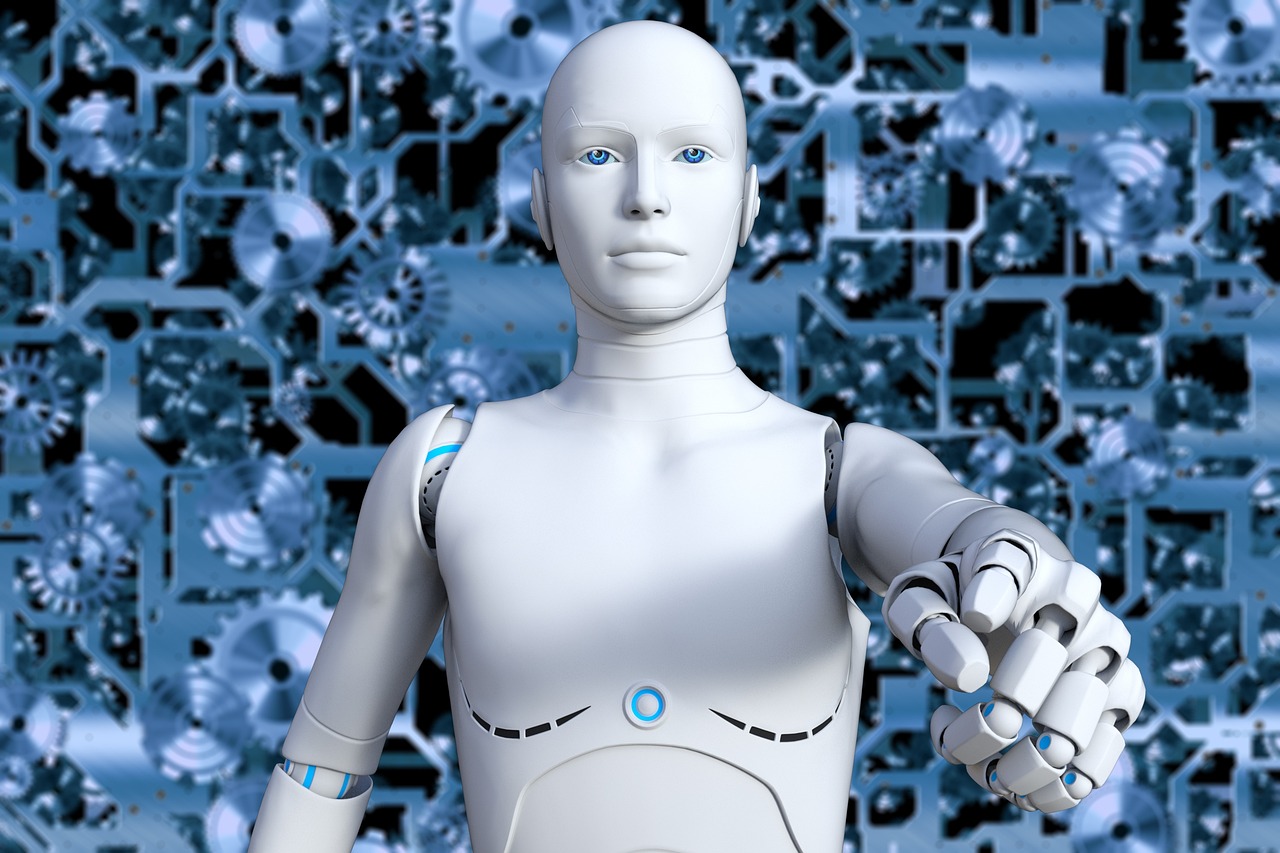
Find out how the combination of AI and robotics will change our world in 2026. This in-depth look at the change from experimental technology to essential infrastructure covers everything from the rise of “Agentic AI” and humanoids like Tesla’s Optimus to AI-powered surgical precision. We talk about the newest trends in “Physical AI,” healthcare breakthroughs, and industrial automation. Whether you love technology or run a business, find out how these “smart machines” are going beyond code to learn how to control the physical world and what this means for the future of work.
AI and robotics in 2026: From Science Fiction to Your Doorstep
Do you remember when “robots” were just big, clunky machines that did the same thing over and over? Or when AI was just a chatbot that sometimes gave you a fake recipe for pasta?
We are now officially in the age of Physical AI. We’re not just talking about software that thinks anymore; we’re talking about machines that do things. The line between digital intelligence and physical reality has officially blurred. A humanoid robot helping to stock shelves at a local warehouse or an AI-powered surgical arm doing a procedure with sub-millimeter accuracy are two examples of this.
In this article, we’ll talk about how AI and robots have worked together to change everything from how we get to work in the morning to how factories around the world work.
1. The Rise of “Agentic AI”: The Brains Behind the Brawn
In 2026, the biggest change isn’t just better hardware; it’s the move toward Agentic AI. Today’s robots don’t just wait for instructions like the “prompt-and-response” models of a few years ago. They make plans, choose, and carry them out.
In the past, if a robot ran into something it wasn’t programmed to handle, it would just stop. With Vision-Language-Action (VLA) models, a robot can “see” a spilt box, “understand” that it shouldn’t be there, and “decide” to clean it up before going back to what it was doing.
What this means:
- Autonomy: Robots are going from “automated” (following a script) to “autonomous” (making their own decisions).
- Natural Interaction: You can now tell a robot to “Hey, move those crates to the back” in plain English, and it will understand what you mean without any complicated coding.
2. Humanoid Robots: Not Just for YouTube Videos Anymore
If 2024 was the year of the prototype, 2026 is the year it will be used. The Humanoid Robotics Market is growing very quickly, thanks to big names and even bigger promises.
- Tesla Optimus Gen 2: These robots are now being tested in Tesla’s own factories, where they are handling battery cells and doing repetitive assembly work.
- Boston Dynamics’ Electric Atlas: The new Atlas has a sleek electric build instead of hydraulics, and it is now a must-have for heavy industrial pilots.
Figure AI and Agility Robotics: These companies have successfully added “Digit” and “Figure 02” to logistics hubs for companies like Amazon and BMW. They may not be making coffee for you in your kitchen yet (unless you have a very high-tech kitchen), but they are proving their worth in places made for people, filling in gaps in the workforce that have been a problem for the manufacturing industry for years.
3. Healthcare: The Robot Will See You Now
One of the best things about 2026 is how AI-powered robots are changing the field of medicine. It’s not about getting rid of doctors; it’s about giving them “superpowers.”
Breakthroughs in the Real World:
- Surgical Precision: Systems like the da Vinci have changed over time. During surgery, they now use AI overlays in real time to show “no-fly zones,” which are areas like important nerves or blood vessels.
- Smart Exoskeletons: AI-powered suits can now “learn” a patient’s specific gait and give them just the right amount of resistance or support to help them heal faster.
- Hospital Logistics: You can now see autonomous “Moxi” robots in the hallways. They deliver linens and medications so that nurses can spend more time with patients.
4. The Fourth Industrial Revolution: Smart Factories
This year, the global market for industrial robots is expected to grow to more than $30 billion. Why? Because factories are no longer just “dumb” places to put things together. They are ecosystems that are linked to each other. https://www.nvidia.com/en-us/omniverse/

Engineers now train robots in a digital twin of the factory using a method called Sim-to-Real. The AI learns the best ways to move in a virtual world where it can fail a million times without breaking anything. When it learns how to do the job, the “brain” is sent to the robot on the floor. According to the International Federation of Robotics (IFR), the merging of Information Technology (IT) and Operational Technology (OT) has made factories almost 25% more efficient since 2024.
5. Problems: Things Don’t Always Go Smoothly
We love our new mechanical coworkers, but Geoffrey Hinton, the “Godfather of AI,” has warned that the rate of change is too fast for us to keep up with.
We have three big problems to deal with:
- Job Loss: Even though new jobs are being created, there are fewer entry-level jobs in logistics and manufacturing.
- Safety and Ethics: If a robot makes a mistake, who is to blame as they become more independent?
- Security: A robot that has been “hacked” is a much bigger problem than an email account that has been hacked. Robotics cybersecurity is now a billion-dollar business.
6. What comes next for AI and robots?
Edge AI will be the main focus as we move into 2027 and beyond. Robots won’t “think” in the cloud anymore, which causes a delay or “latency.” Instead, they will have powerful AI chips built right into their frames. This means that you can react in a split second and have more privacy.
Robotics-as-a-Service (RaaS) is also becoming more popular. This makes it possible for small businesses to “rent” a robot for busy times instead of buying one outright.
The combination of AI and robotics is no longer something that will happen in the future; it is happening right now. Smart machines are becoming the unseen backbone of modern life, from the factories that make our clothes to the hospitals that keep us healthy.
The line between the real world and the digital world is getting thinner all the time. As we get closer to 2027, the focus is on AI-native 6G networks, which will give these robots the super-low latency they need to talk to each other in real time. If you’re a business owner who wants to automate or a tech fan who is just watching, one thing is clear: the robots aren’t coming—they’re already here and ready to help.
7. Healthcare and the “Soft” Side of Robots
It’s not just heavy lifting and car parts. In 2026, robotics has a surprisingly soft touch.
- Micro-Robotics: Startups like AR matrix are using snake-like robotic arms for surgeries that don’t hurt and to look at dangerous small spaces.
- Care-Bots: In places like Japan and parts of Europe where the population is getting older, humanoid carers are helping older people move around and talk to others. These robots are powered by AI that can read facial expressions.
- Diagnostics: In rural clinics, AI-powered medical robots are now doing retinal scans that can find diseases years before traditional symptoms show up.
8. How to Solve the “Kidnapped Robot” Problem
The answer to the “Kidnapped Robot” problem is a huge technical breakthrough in 2026. In the past, if you picked up a robot and moved it, it would “lose” its way because its internal map didn’t match what was around it. With the help of new 3D LiDAR and MCL-DLF (Monte Carlo Localization) systems, robots can now find their way around just like people do. They look for “landmarks,” like a certain pillar or door frame, to find out where they are. Because they don’t get “confused” by construction https://nvidianews.nvidia.com/news/nvidia-releases-new-physical-ai-models-as-global-partners-unveil-next-generation-robots or crowds anymore, autonomous delivery robots in cities are much more likely to work.
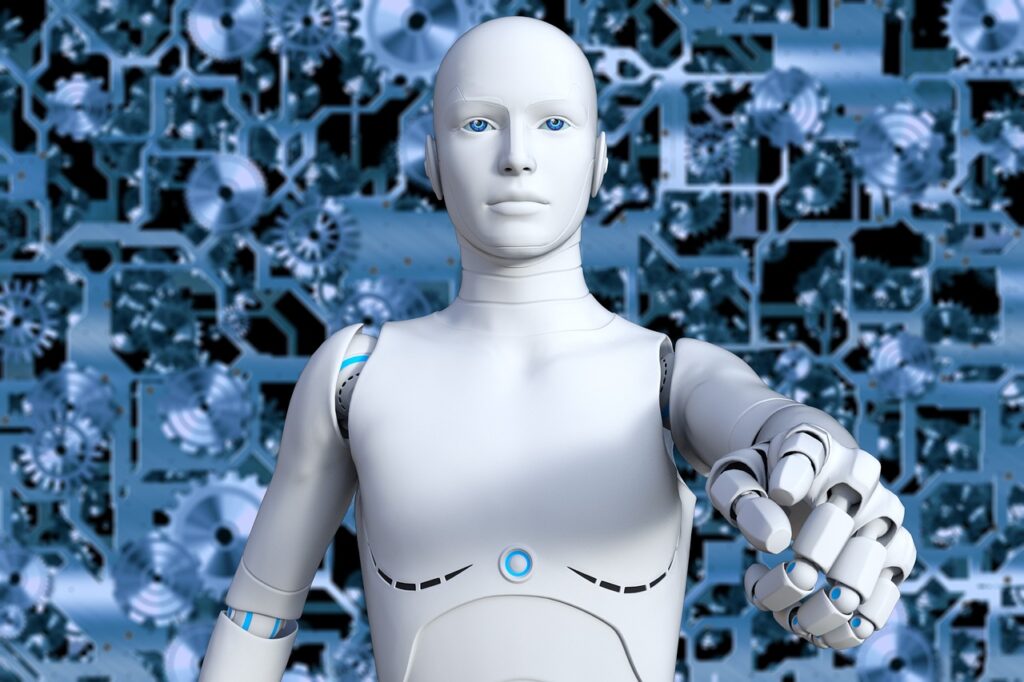
Convergence of Intelligence and Form: AI and robotics in 2026.
Artificial Intelligence (AI) and Robotics was a separate discipline, with one side handling the brain (software and algorithms) and the other one the body (sensors, actuators, and mechanical engineering). Nowadays, in 2026, the difference has practically died out. It is a time of the embodiment of intelligence where what previously existed in a form of a statuette server is now taken on to the physical world and it fulfills the functions previously performed by the hands and determination of human beings.
9. The Brain and the Body: One Strategic Synergy.
The essence of the correlation between AI and robotics is synergy. The cognitive framework-machine learning, computer vision and natural language processing- is offered by AI, and ultimately it is the robotics which has the physical interface to deal with reality.
One of the major breakthroughs in 2026 would be the emergence of Agentic AI in robotics. Modern systems have agentic frameworks as opposed to traditional robots that adhered to fixed, pre-programmed routes and paths. An autonomous mobile robot (AMR) in a warehouse, as an example, does not simply stop upon encountering an obstacle, its nature, it reacts to the change by reevaluating its path depending on the priority of the delivery, and notifies a central hive-mind of its position.
The industry is currently characterized by a number of pillars:
Generative AI in Physiological Tasks Imagine writing, imagine drawing, imagine building, imagine playing, imagine all these things can now be performed millions of times by Generative AI before a robot is ever delegated to do it.
The Rise of Humanoids 2026 has witnessed the companies such as Tesla and Figure transfer lab prototypes to pilot implementations at car plants. The purpose of these bipedal robots is to operate within man-made environments that replace the workforce in the high-churn industries.
Edge Computing and 5G With machines responding to AI information with milliseconds of latency (processed locally on the robot, not on the cloud), edge computing has transformed machines into devices that react instantly, as required by a human-robot interaction.
Important Lessons for 2026
Trend Impact: By observing and “reasoning” through tasks, physical AI robots can now learn. Humanoid Maturity: Figure AI and Tesla have advanced from demonstrations to practical implementation. Coots 2.0: Industrial-grade collaborative robots can now safely work alongside people. The majority of Edge AI Most robots are now faster and more private because they process data locally, or on-device


Leave a Reply