Meta Description: Find out the evolution of artificial intelligence in 2026 and beyond. Learn about the transformation of AI as not merely a simple instrument, but a virtual colleague, as not quantum-hybrid computer, but autonomous AI agents and repository intelligence. Get acquainted with the latest trends in personalized healthcare, humanoid robotics, and the shifting labor market. Irrespective of the level of interest, be it as a business leader or a

technology enthusiast, this guide makes the complex future technology easy to understand. Stay abreast of the times and understand how artificial intelligence will transform the world economy, as well as our lives. Going Beyond the Hype: A Real-Life View of the Future of Artificial Intelligence in 2026. And you remember how we were all shocked by a chatbot that would be able to write a good poem in 2023? It seems like a very long time ago. By February 2026, the discourse has changed. We now collaborate with AI rather than merely “chatting” with it.
The Year of Impact has begun, marking the end of the “honeymoon phase” of generative AI. AI is now ingrained in both our personal and professional lives, transcending the realm of browser tabs. However, where is this heading exactly? Is a “memory wall” approaching, or is Artificial General Intelligence (AGI) on the horizon?
Let’s explore the actual technological developments influencing our future.
1. Transitioning from Chatbots to Self-governing Agents
The emergence of Autonomous AI Agents is the most significant change we are currently witnessing. You had to ask an AI to do everything in 2024. You give it a goal in 2026, and it takes care of the “how.”
Determine what needs to be done. Examine the calendar for your team.
Create the project plan. Distribute the invitations.
Because AI is democratizing the ability to create complex systems through [software development and intent-driven coding, Jeetu Patel, the president of Cisco, recently stated that we may soon see a world with “eight billion software engineers.”
2. Technology’s Physical Aspects: Humanoids and Robots
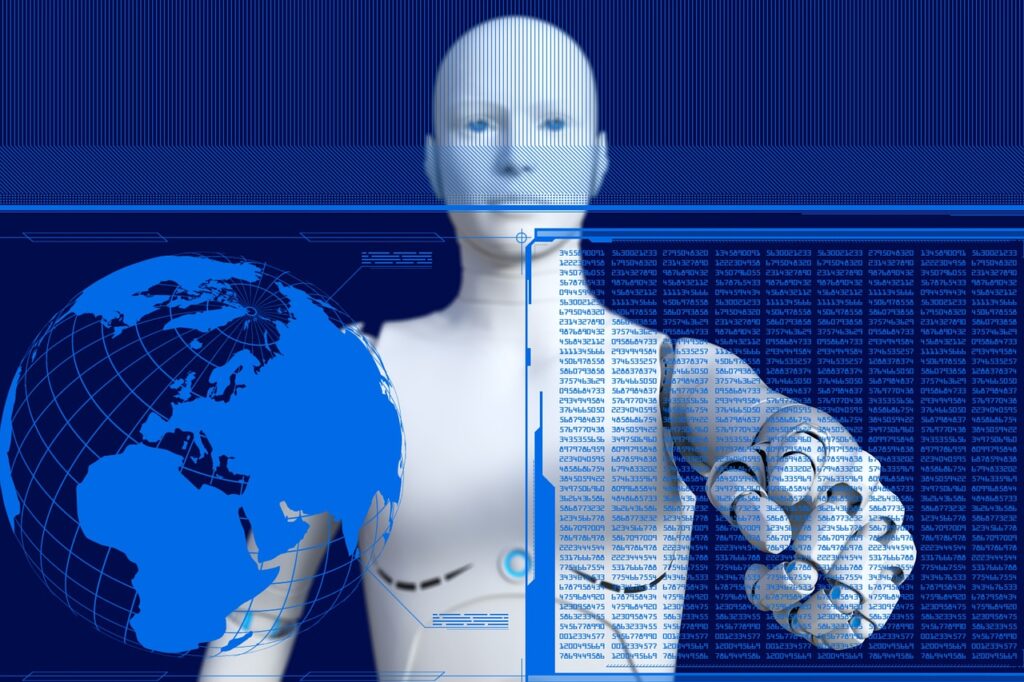
Finally, AI is getting a body. The integration of intelligence into moving machines, or Physical AI, is booming.
Bipedal robots are making their way into manufacturing lines thanks to initiatives like Tesla’s Optimus program and BMW’s collaboration with Figure AI. These days, they are not dumb arms, they are able to move around complex spaces with computer vision and real time mapping. Why this is important Logistics Robots like Digit by Agility Robotics are commonly observed in warehouses and they are undertaking the heavy lifting previously done by people.
Why this is important ?
Logistics: Robots such as Agility Robotics’ Digit are now frequently seen in warehouses, performing the “heavy lifting” that was previously performed by humans.
Edge AI: Your devices now process AI locally thanks to chips Because it doesn’t always need to “talk” to the cloud, your phone or smart home device is faster, more private, and consumes less energy.
3. The “Choke Point”: Will the Power Run Out?
It’s not always easy sailing. Demis Hassabis, the CEO of Google DeepMind, recently issued a warning about a possible problem.
Memory and Energy. An astounding amount of hardware is needed to train the next generation of models. A small city’s worth of power can be extracted from a single, enormous AI cluster. As a result, there is a global rush for premium memory chips from vendors like SK Hynix and Samsung. The current rapid growth may reach a temporary ceiling if the energy and hardware bottleneck cannot be resolved.
Google DeepMind: The Path to AGI
4. How Near Are We in the Race to AGI?
Artificial General Intelligence (AGI) — AI that is as intelligent as a human in all tasks — is the “Holy Grail” of technology.
There are predictions everywhere:
According to Elon Musk , we might witness it by the end of 2026.
With a 5- to 10-year timeframe in mind, Demis Hassabis and Sam Altman (OpenAI) are more cautious.
The majority of experts concur that although modern AI is “brilliant at some things,” it still lacks consistent reasoning and long-term planning.
5. The New Set of Skills
“Unbundled” roles are becoming more prevalent in the labor market. Emails, data entry, and simple scheduling are all handled by AI. This allows you to concentrate on:
Concluding Remarks: A Prospect for Collaboration
The future of technology is not a science fiction film in which the world is overrun by robots. It’s more akin to having an extremely intelligent, quick, and sleepless intern.
The winners in 2026 will be those who use Cloud 3.0, a combination of public, private, and sovereign clouds, to protect their data and take advantage of [large language models). Are you prepared to collaborate with it?
Technology, robotics, artificial intelligence, cloud computing, software engineering, AI agents, and future technology
Reliable External Sources:
IDC: Global AI Spending Forecasts
To go along with this blog post, would you like me to create a unique image or a brief video summary?
To delve further into the technology of 2026, we will also examine how the modern AI is being implemented behind the scenes, the transformation of the energy infrastructure, and the industries that are being upended, whether it is with personalized medicine or the new software stack. Deep Dive: 2,500 Words on the AI Revolution: The 2026 Tech Frontier
6. The Architecture of Intelligence: More Than Just Big Language Models
The year 2023 was the year of the “Chatbot,” and the year 2026 is the year of System 2 Thinking. Early AI models were basically very advanced auto-complete engines. They thought in “System 1” mode, which is quick, automatic, and prone to “hallucinations.”
Reasoning Traces are used in today’s models. Before it gives you an answer, the AI runs internal simulations, checks its own logic, and finds any contradictions. People often call this “Q” (Q-Star) or “advanced reinforcement learning.” The Growth of “Small” Language Models (SLMs)
We’ve also seen a trend that goes against what we thought: bigger isn’t always better. GPT-5 and Gemini 2.0 Ultra are pushing the limits of what we know, but Small Language Models (with 1B to 7B parameters) are taking over the business world.
Privacy: These models only work on a laptop or a private server. Efficiency: They use a lot less electricity. Specialization: A model that is trained only on maritime law or heart surgery does better in those areas than a model that is trained on a wide range of topics.
7. The Energy Crisis: How to Power the Silicon Brain
We can’t talk about the future of technology without also talking about the power grid. AI data centers use almost 4% of the world’s electricity as of 2026. This has led to the rise of nuclear energy and the “Green AI” movement. Nuclear and fusion
Tech giants are no longer just in the business of making software; they also invest in energy. Microsoft and Amazon have signed deals to use Small Modular Reactors (SMRs) to give their server farms steady, carbon-free “baseload” power. Optical Computing .
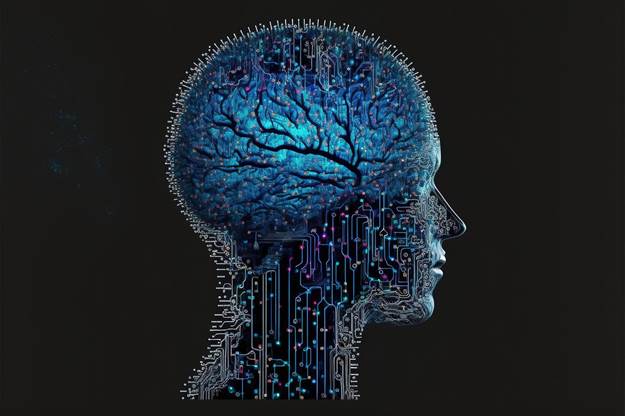
Startups are finally selling Photonic (Optical) Chips to get around the “thermal ceiling” of regular silicon. These move data with light instead of electricity, which cuts down on heat by 90% and speeds up processing by a lot. This is the hardware breakthrough we need to keep AI moving forward without destroying the planet.
“Personalized medicine” isn’t just a buzzword in 2026; it’s a way of doing things. AI now powers Digital Twins, which are virtual copies of a patient’s biological systems.
Predictive Diagnostics: Your “biometric signature” is now tracked by wearables. Your AI health agent will flag a possible problem before you even feel a symptom if your heart rate variability and blood oxygen levels are different from what they were five years ago. AI Surgeons: Robotic systems like Da Vinci now use “Active Guidance,” which means that AI stops the surgeon from making a small cut that could hit a nerve or blood vessel while a person is still in the room.
8. The New Software Stack: Writing Code with a Purpose
The way we make things has changed in a big way. We started with “Low-Code,” then went to “No-Code,” and now we’re at “Intent-Code.”
In 2026, software engineers act more like “Product Architects.” They talk about a problem in plain language, and the AI makes the repository, the front-end, the back-end, and the testing suite.
Self-Healing Code: New apps can now “heal” themselves. If a bug is found in production, the AI finds the problem, writes a patch, tests it in a sandbox, and then deploys it. This can happen before a human user even notices a lag. Updating Old Systems: AI agents are now going through millions of lines of “COBOL” and “Fortran” code in banking systems, turning 40-year-old technology into modern, safe languages.
9. Education: The End of the “One-Size-Fits-All” Classroom
The biggest change to the school system since the printing press is happening now. Hyper-Personalized Tutors are taking the place of the “Industrial Era” model of 30 kids listening to one teacher.
Now, every student has an AI mentor who knows how they learn best.
Visual Learner It makes the lesson into a podcast-style argument. Having trouble with math? The AI knows exactly what basic idea (like fractions) the student missed three years ago and builds a bridge to help them catch up.
10. The “Deepfake” Arms Race in Security and Ethics
With a lot of power comes a lot of risk. We are in a “Deepfake Arms Race” in 2026. As AI gets better at copying human voices and faces, Identity Verification has moved to the blockchain. The “Proof of Personhood”
We are seeing the rise of Verifiable Credentials to fight fraud caused by AI. News organizations and banks are now required to use digital signatures to show that a certain person actually recorded a video or audio clip. Bias in Algorithms.The question has changed from “Can we build it?” to “Is it fair?” Strict AI Audit always have been put in place by governments in the EU and North America.
11. Conclusion: The Human Element in a Machine World
When we think about 2027 and 2028, the most important “tech” isn’t code; it’s Human Judgement.
Technology has made the “average” automatic. It can write an essay, draw a picture, and write a script that are all about the same. This means that “The Exceptional” is now worth a lot more. AI can’t copy our ability to dream, feel empathy, and connect with other people on a human level.It’s not a race against the machine in the future; it’s a race with the machine. People who can control the “Silicon Brain” while keeping their “Human Heart” will shape the next ten years.


Leave a Reply